
High-scoring construction materials testing practical exam responses are clear, traceable, and focused on exactly what the task asks for. State the requested result, show the supporting measurements and calculations, then give a conclusion that the recorded data can support.
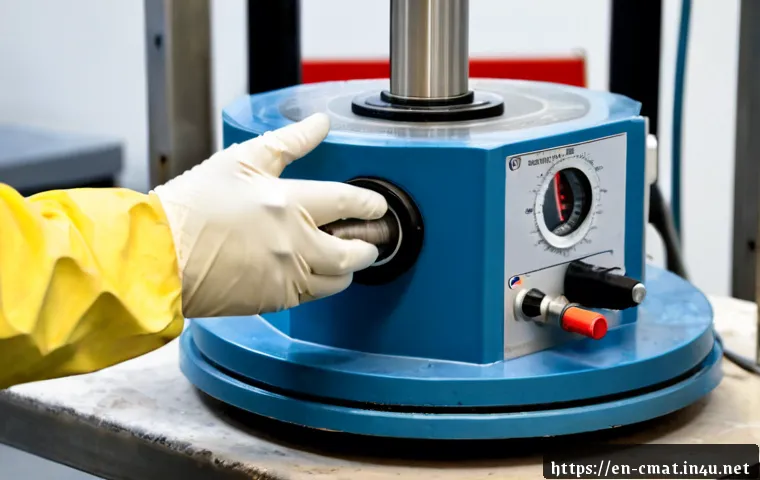
A model answer is useful as a writing framework, not as text to copy without adjustment. If you are choosing between self-study resources, mock grading, or lab training, start with the skill that currently costs you the most marks.
Paid support can be worthwhile when it provides specific feedback on your reports, calculations, or equipment procedure. Always confirm the current official exam instructions and applicable test standards before finalizing your study method.
At a Glance
- Answer the requested output first, then make every calculation and statement easy to trace.
- Keep test conditions, observations, calculations, and judgments separate in your written response.
- Choose self-study, mock grading, or lab training based on your weakest practical-exam skill.
| Preparation option | Best fit | Time commitment | Typical value |
|---|---|---|---|
| Self-study with answer templates | Candidates already familiar with laboratory work and basic calculations | Flexible individual practice | Builds a repeatable reporting structure |
| Mock-answer grading | Candidates whose work is mostly correct but poorly organized or incomplete | Practice plus review cycles | Finds missing units, weak logic, and reporting errors |
| Supervised lab training | Candidates with procedure, equipment handling, or timing gaps | Scheduled practical sessions | Supports hands-on confidence and procedural accuracy |
What a High-Scoring Practical Response Usually Includes
A strong response makes it easy for an assessor to follow your work. It should show what was requested, what information was recorded, how the result was obtained, and what the result means within the task. Do not rely on a polished final sentence if the work leading to it is unclear.
Give the requested result first, then show the supporting work
Read the command word carefully. If the task asks for a calculated value, provide that value in a clear final-result line and then show the calculation path. If it asks for a judgment, state the judgment and identify the recorded basis for it. A response can lose clarity when it begins with unrelated theory instead of the required output.
Separate test conditions, calculations, observations, and conclusions
Use distinct sections or clear labels. Record specimen details and test conditions as inputs. List observations as observations. Show arithmetic as calculations. Reserve the conclusion for an engineering interpretation that follows from the evidence. This separation prevents a common error: presenting an assumption as though it were a measured value.
Use units, tolerances, and terminology consistently
Every relevant number should have the appropriate unit. Use the same term for the same item throughout the answer, and do not switch between raw readings and derived results without explanation. If a tolerance, criterion, or procedure is needed, use only the one specified for your exam task or verified from the current applicable source.
A Model-Response Framework for Materials Testing Tasks
Instead of memorizing a full sample response, use a framework that adapts to different construction materials testing tasks. It keeps your answer complete while leaving room for the actual data and instructions provided on exam day.
Step 1: Identify the test objective and required output
Write a short internal prompt before answering: “What must I submit?” It may be a value, a test record, a procedure summary, a comparison, or a final judgment. Highlight any required format, stated condition, or requested sequence. This first step reduces the risk of answering a different question than the one asked.
Step 2: Record inputs and conditions without assumptions
List only information provided or directly observed: specimen identification, measurements, stated conditions, equipment readings, and task-specific instructions. If information is absent, do not invent it to make the answer look complete. Where a template has a field that cannot be supported by the task, follow the exam’s stated reporting requirement rather than filling it with a guess.
Step 3: Show calculations in a checkable order
Present the formula or calculation relationship, substitute the recorded values, retain units where relevant, and identify the final result. Keep intermediate steps readable. A mock grading service can be especially useful here because another reviewer can spot a misplaced value, an omitted conversion, or a result that does not match the numbers shown.
Step 4: State the engineering interpretation carefully
Your conclusion should not go beyond the evidence. A careful conclusion links the result to the requested criterion or comparison only when that criterion is actually supplied or verified. Avoid broad statements such as “acceptable” or “failed” unless the task gives a valid basis for that decision.
Compare Preparation Options Before Paying for Training
Preparation resources work best when they solve a specific problem. Before paying for an exam preparation course, technical tutor, or materials-testing lab training program, identify whether your main weakness is writing, calculation, procedure, or time management.
Self-study with answer templates: best for candidates with solid lab familiarity
Templates are useful when you understand the basic workflow but need consistency. Build a blank response sheet with headings for objective, inputs, conditions, observations, calculations, result, and conclusion. Practice completing it from different task prompts. The limitation is that a template cannot tell you whether your procedure or interpretation is technically weak.
Mock-answer grading: best for report structure and calculation errors
Choose mock grading if your calculations are usually correct but your written reports lose marks through missing details, unclear organization, or unsupported conclusions. Look for feedback that marks the exact line needing revision and explains what should be checked. Generic praise is less useful than actionable correction.
Hands-on lab training: best for procedure, equipment, and timing gaps
Supervised practical training may be a better fit if you hesitate around equipment, forget the order of a procedure, or struggle to record information while working. A training session should give you a chance to perform tasks, not only watch demonstrations. Confirm whether the available equipment and procedures are relevant to your current exam requirements.
What to verify before choosing a paid course or tutor
Ask how feedback is delivered, whether practical access is included, how current the study materials are, and whether the provider distinguishes official requirements from its own teaching method. Do not assume that a course’s sample answers, report templates, or laboratory routine automatically match your exam session.
Practical Exam Mistakes That Can Reduce Marks
Many avoidable mistakes come from weak documentation rather than a total lack of subject knowledge. Use a final review routine that checks the link between data, calculations, and conclusion.

Writing a conclusion that the measurements do not support
A conclusion must follow the presented work. Do not declare compliance, quality, suitability, or failure unless the task provides a criterion and your recorded result can be compared with it. If the prompt only asks for a result, give the result without adding an unsupported judgment.
Omitting units, specimen details, or test conditions
Missing context can make an otherwise correct calculation difficult to assess. Check that each important measurement has a unit and that relevant specimen or condition details are included when requested. A neat report is not enough if key information cannot be traced.
Mixing up measured values, calculated values, and acceptance judgments
Label values by their role. A measurement is not the same as a calculated result, and neither is automatically an acceptance decision. This simple distinction improves technical writing and helps prevent contradictions in a practical exam response.
Memorizing a sample response without adapting it to the task
Memorized wording can cause you to include conditions that were never provided or skip the output actually requested. Practice using model responses as a checklist of sections, then rewrite the response using only the facts in a fresh task.
Study Plans for Different Candidate Situations
If you understand theory but struggle to write complete answers
Practice short timed reports using the same structure each time. After writing, check for the objective, inputs, calculations, units, final result, and evidence-based conclusion. Mock-answer review can help reveal patterns that are hard to notice alone.
If calculations are slow or frequently inconsistent
Separate calculation practice from full-report practice at first. Repeat the sequence of identifying values, selecting the required relationship, substituting data, checking units, and reviewing the final figure. Then place the calculation back into a complete response.
If you have limited access to testing equipment
Use diagrams, procedure notes, and reporting exercises to learn the order of work, but recognize the limit of paper-only practice. If equipment handling is your biggest gap, compare practical training options that allow supervised use and direct correction.
If you are retaking the practical exam
Do not simply repeat the same memorization routine. Identify the point where your previous preparation broke down: task interpretation, recording, arithmetic, procedure, timing, or final judgment. Spend your next study cycle on that narrow weakness before adding more sample answers.
Selection Criteria and Comparison Summary
Choose resources based on the scoring area you need to improve most. Check feedback specificity, access to practical equipment, current and verifiable materials, fit with your available study time, and total cost before enrolling. Choose mock grading if your calculations are correct but your written reports lose marks. Choose supervised lab training if the issue is procedure, equipment use, or working under practical conditions. For course details, instructor feedback policies, and practical-session conditions, check the provider’s official page before making a payment.
In Closing
A model response should help you think in a reliable order, not encourage blind copying. Start with the requested result, make the supporting work traceable, and keep your conclusion within the evidence provided. The most efficient preparation choice is usually the one that addresses your weakest scoring area. Confirm current official requirements before treating any template or training material as final.
Useful Information to Keep in Mind
1. Create one reusable answer checklist rather than memorizing many long responses.
2. Review units and labels before reviewing style.
3. Save corrected mock answers and categorize each error by type.
4. Treat hands-on practice and report-writing practice as related but separate skills.
Important Notes
The official practical exam format, task types, time limit, scoring criteria, standards, report templates, and equipment procedures may change or differ by exam session. This is a general preparation guide, not an official marking rubric. Verify current instructions, approved procedures, and any required references through the appropriate official exam information before relying on a model-answer resource.
Frequently Asked Questions
Q1. Is memorizing model answers enough to pass a construction materials testing practical exam?
A1. Usually, no. Model answers can teach structure, but the task data, required output, procedure, and applicable criteria may differ. Practice adapting the structure to new information rather than repeating fixed wording.
Q2. When is paid mock grading more useful than a practical training course?
A2. Mock grading is often the better fit when you understand the procedure and calculations but lose quality through incomplete reports, unclear calculation steps, missing units, or weak conclusions. Practical training is more relevant when you need equipment and procedure practice.
Q3. What should I check before paying for a construction materials testing exam-prep provider?
A3. Check whether materials are current, whether feedback is specific, whether practical access is available when needed, what is included in the total cost, and whether the provider clearly separates official exam requirements from its own study approach.